The Plum Pudding Model: How J.J. Thomson’s Atomic Vision Shaped Modern Science
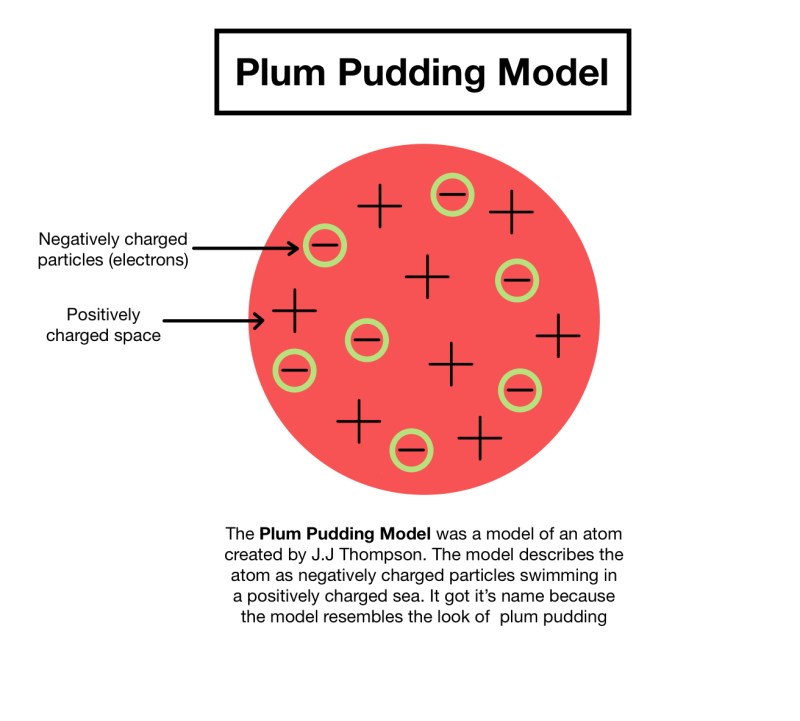
The plum pudding model wasn’t just a theory—it was a seismic shift in how humanity understood the building blocks of matter. Proposed in 1904 by physicist J.J. Thomson, this atomic framework suggested that atoms weren’t indivisible spheres, as Dalton had once claimed, but instead resembled a positively charged "pudding" studded with negatively charged "plums" (electrons). The model emerged from Thomson’s groundbreaking experiments with cathode rays, which revealed that atoms contained subatomic particles far smaller than themselves. For the first time, scientists could visualize atoms as dynamic, composite systems rather than static, unbreakable units. This wasn’t mere speculation; it was a direct consequence of Thomson’s work at Cambridge’s Cavendish Laboratory, where he had earlier discovered the electron in 1897. The plum pudding model, though later superseded, laid the groundwork for Rutherford’s gold foil experiment and the nuclear model—a testament to how scientific progress often hinges on incremental, yet radical, reimaginings of reality.
What made the plum pudding model so compelling was its simplicity and elegance. Thomson’s "pudding" wasn’t arbitrary; it was a response to the puzzling behavior of electrons within atoms. If atoms were neutral overall, yet contained negatively charged electrons, there had to be a balancing positive charge. Thomson proposed that this positive charge was diffused throughout the atom like a uniform, jelly-like substance, with electrons embedded within it like raisins in a fruitcake. This analogy wasn’t just poetic—it provided a testable framework. The model suggested that electrons could move freely within the atom, explaining phenomena like electrical conductivity and the emission of light. Yet, beneath its intuitive charm lay a fundamental flaw: it couldn’t account for the stability of atoms or the discrete spectral lines observed in atomic spectra. The cracks in this theory would soon be exposed by Ernest Rutherford’s experiments, but not before the plum pudding model had cemented its place in scientific history.
The legacy of the plum pudding model extends far beyond its eventual obsolescence. It was the first atomic theory to acknowledge the existence of subatomic particles, a radical departure from the atomic dogma of the 19th century. Thomson’s work didn’t just challenge the status quo—it forced scientists to reconsider the very nature of matter. The model also bridged the gap between classical physics and the emerging quantum revolution, influencing later theories about atomic structure and even early quantum mechanics. Without the plum pudding model, the path to Rutherford’s nuclear model—and eventually, Bohr’s planetary model—would have been far less straightforward. Its influence persists in modern physics, where the concept of a continuous positive charge distribution (albeit refined) still appears in advanced theories of atomic behavior.
The Complete Overview of the Plum Pudding Model
The plum pudding model of atomic structure was a product of its time, emerging at the turn of the 20th century when physics was on the cusp of major upheavals. Before Thomson’s proposal, atoms were widely believed to be the smallest, indivisible particles of matter, as articulated by John Dalton in the early 1800s. Dalton’s atomic theory was elegant in its simplicity: atoms were solid, unchanging spheres that combined in fixed ratios to form compounds. However, the discovery of cathode rays in the late 19th century—streams of particles emitted from the cathode in a vacuum tube—shattered this view. Thomson’s experiments demonstrated that these rays carried a negative charge and were far lighter than atoms themselves, leading him to conclude that atoms must contain these negatively charged particles, which he named corpuscles (later renamed electrons). This revelation necessitated a new atomic model, one that could accommodate both the electron’s existence and the atom’s overall neutrality. The plum pudding model was Thomson’s answer: a positively charged "soup" with electrons scattered throughout, like plums in a pudding.The model’s significance cannot be overstated. It was the first atomic theory to incorporate subatomic particles, marking a departure from the idea of atoms as fundamental, unbreakable units. Thomson’s proposal also addressed a critical question: if electrons were negatively charged, what balanced their charge within the atom? His solution—a diffuse, positively charged medium—was a bold attempt to reconcile the new evidence with existing scientific principles. The plum pudding model wasn’t just a theoretical construct; it was a direct response to experimental data. Thomson’s cathode ray experiments had shown that electrons could be deflected by electric and magnetic fields, implying they were particles with mass and charge. The model provided a visual and conceptual framework to explain these observations, even if it later proved incomplete. Its influence extended beyond atomic theory, inspiring discussions about the nature of electricity and the structure of matter at a fundamental level.
Historical Background and Evolution
The origins of the plum pudding model trace back to the late 19th century, a period when physics was undergoing a dramatic transformation. The discovery of X-rays by Wilhelm Röntgen in 1895 and radioactivity by Henri Becquerel in 1896 had already hinted at the complexity of atomic structure. Thomson’s own work on cathode rays, beginning in the 1890s, was pivotal. By 1897, he had conclusively demonstrated that cathode rays consisted of negatively charged particles—electrons—with a mass about 1,800 times smaller than that of a hydrogen atom. This discovery forced scientists to reconsider the atomic models of the time, which treated atoms as homogeneous and indivisible. Thomson’s plum pudding model, proposed in 1904, was his attempt to integrate these new findings into a cohesive atomic theory.The model’s evolution reflects the scientific process itself—hypothesis, experimentation, and refinement. Initially, Thomson’s work focused on the electron’s properties, but as he delved deeper into atomic structure, he realized that a new model was needed to explain how electrons could coexist within atoms without being repelled by each other. His solution was to propose a positively charged "sphere" with electrons embedded within it, much like plums in a pudding. This analogy was more than just a metaphor; it suggested a specific distribution of charge and mass within the atom. The model gained traction because it provided a plausible explanation for atomic neutrality and the behavior of electrons in various physical and chemical processes. However, it was not without its critics. Some scientists, including Thomson himself, recognized that the model had limitations, particularly in explaining the stability of atoms and the discrete nature of atomic spectra. These shortcomings would eventually lead to Rutherford’s groundbreaking experiments in 1911, which dismantled the plum pudding model and introduced the nuclear model of the atom.
Core Mechanisms: How It Works
At its core, the plum pudding model posited that an atom consisted of a uniform, positively charged "pudding" with negatively charged electrons scattered throughout, like raisins in a fruitcake. This distribution was intended to balance the negative charge of the electrons with an equal positive charge, ensuring the atom’s overall neutrality. The model suggested that electrons could move freely within this positively charged medium, which explained phenomena such as electrical conductivity and the emission of light when electrons were excited. Thomson’s theory also implied that the positive charge was spread out evenly, rather than concentrated in a central nucleus, as later models would propose. This diffuse positive charge was thought to be a fundamental property of matter, analogous to how a liquid could fill a container uniformly.Table of Contents
- The Complete Overview of the Plum Pudding Model
- Historical Background and Evolution
- Core Mechanisms: How It Works
- Key Benefits and Crucial Impact
- Major Advantages
- Comparative Analysis
- Future Trends and Innovations
- Conclusion
- Comprehensive FAQs
- Q: Who proposed the plum pudding model, and why?
- Q: What was the main flaw in the plum pudding model?
- Q: How did the plum pudding model influence later atomic theories?
- Q: Was the plum pudding model ever experimentally proven?
- Q: Why is the plum pudding model still taught in science education?
- Q: How did the plum pudding model compare to Dalton’s atomic theory?
- Q: Are there any modern applications of the plum pudding model’s concepts?
- Q: Did J.J. Thomson win a Nobel Prize for his work on the plum pudding model?
- Q: What analogies are used to describe the plum pudding model today?
- Q: How did Ernest Rutherford disprove the plum pudding model?
The mechanics of the plum pudding model were grounded in Thomson’s experimental observations. His cathode ray experiments had shown that electrons could be deflected by electric and magnetic fields, indicating they were particles with mass and charge. The model provided a way to visualize how these electrons could be part of an atom without violating the laws of electrostatics. For instance, if electrons were distributed throughout a positively charged sphere, their repulsive forces would be balanced by the surrounding positive charge, allowing the atom to remain stable. Additionally, the model suggested that atoms could gain or lose electrons, explaining chemical bonding and the formation of ions. However, the lack of a central nucleus meant the model couldn’t account for the discrete spectral lines observed in atomic spectra, which would later become a major point of contention.
Key Benefits and Crucial Impact
The plum pudding model was more than a theoretical curiosity—it was a catalyst for change in the scientific community. By introducing the concept of subatomic particles within atoms, Thomson’s model shattered the long-held belief in the indivisibility of atoms. This shift was crucial for the development of modern physics, as it opened the door to further discoveries about the structure of matter. The model also provided a framework for understanding electrical phenomena at the atomic level, such as conductivity and the behavior of electrons in metals. Without the plum pudding model, the subsequent work of Rutherford, Bohr, and other physicists might not have been possible. Its influence extended beyond atomic theory, inspiring new avenues of research in chemistry, electronics, and even early quantum mechanics.The plum pudding model’s impact on education and public perception of science was equally significant. It offered a tangible, visual representation of atomic structure, making complex ideas more accessible to students and the general public. Thomson’s analogy of electrons as plums in a pudding was memorable and intuitive, helping to demystify the emerging field of atomic physics. The model also highlighted the importance of experimental evidence in shaping scientific theories, setting a precedent for future discoveries. Despite its eventual obsolescence, the plum pudding model remains a testament to the iterative nature of scientific progress, where each theory builds upon—and ultimately refines—the work of its predecessors.
"The discovery of the electron was the first crack in the wall of atomic indivisibility, and Thomson’s plum pudding model was the first attempt to rebuild that wall with new materials. It was a necessary step, even if it wasn’t the final answer."
— Ernest Rutherford, reflecting on Thomson’s contributions
Major Advantages
- First subatomic particle theory: The plum pudding model was the first to propose that atoms contained smaller particles (electrons), challenging the atomic dogma of the 19th century.
- Explanation of atomic neutrality: By suggesting a diffuse positive charge to balance electron negativity, the model provided a plausible mechanism for why atoms were electrically neutral.
- Foundation for quantum theory: The model’s focus on electron behavior laid the groundwork for later theories about atomic spectra and electron orbitals.
- Experimental validation: Thomson’s cathode ray experiments directly supported the existence of electrons, lending credibility to the plum pudding model as a scientific hypothesis.
- Educational accessibility: The "plums in pudding" analogy made atomic structure more understandable to a broader audience, fostering public interest in physics.

Comparative Analysis
The evolution of atomic models reflects the progressive refinement of scientific understanding. Below is a comparison of key atomic theories, highlighting their differences and contributions.| Model | Key Features |
|---|---|
| Dalton’s Atomic Theory (1803) | Atoms are indivisible, solid spheres; elements differ in atomic weight. No subatomic particles. |
| Plum Pudding Model (1904) | Atoms contain negatively charged electrons embedded in a positively charged "pudding." First subatomic particle theory. |
| Rutherford’s Nuclear Model (1911) | Atoms have a tiny, dense nucleus with electrons orbiting it. Explains atomic stability and scattering experiments. |
| Bohr’s Model (1913) | Electrons orbit the nucleus in fixed energy levels (quantized orbits). Explains atomic spectra and electron transitions. |
Future Trends and Innovations
The plum pudding model, though superseded, remains a critical milestone in the history of atomic theory. Its legacy is evident in modern physics, where the study of atomic structure continues to evolve. Today, atomic models are far more complex, incorporating quantum mechanics, electron clouds, and nuclear physics. However, the foundational questions posed by Thomson’s model—What is an atom made of? How are its components arranged?—still drive cutting-edge research. Advances in particle physics, such as the discovery of quarks and the Standard Model, can be traced back to the early 20th-century debates sparked by the plum pudding model. Future innovations may further refine our understanding of atomic structure, potentially uncovering new subatomic particles or redefining the nature of matter itself.Looking ahead, the study of atomic models is likely to intersect with emerging fields like quantum computing and nanotechnology. Quantum computers, for instance, rely on the precise manipulation of atomic and subatomic particles, a concept that was first explored in the context of atomic theories like Thomson’s. Similarly, nanotechnology leverages the properties of atoms and molecules to create materials with unprecedented capabilities. The plum pudding model’s emphasis on the electron’s role in atomic behavior continues to resonate in these fields, underscoring its enduring relevance. As scientists push the boundaries of physics, the lessons learned from Thomson’s work remain a guiding light, reminding us that even "failed" theories often contain seeds of future breakthroughs.

Conclusion
The plum pudding model was a turning point in the history of science, marking the transition from classical atomic theory to a more dynamic, particle-based understanding of matter. Thomson’s work didn’t just answer questions—it revealed that the questions themselves were far more complex than previously imagined. The model’s limitations, such as its inability to explain atomic spectra or nuclear stability, ultimately led to its replacement by Rutherford’s nuclear model. Yet, this replacement wasn’t a repudiation but an evolution. The plum pudding model provided the necessary framework for the next generation of physicists to build upon, demonstrating how scientific progress often requires both bold hypotheses and the humility to revise them.Today, the plum pudding model is remembered not as a failed theory but as a stepping stone. It taught scientists the importance of experimental evidence, the value of visual analogies in explaining complex ideas, and the necessity of questioning long-held assumptions. In an era where atomic and subatomic physics continue to advance at a rapid pace, Thomson’s contributions remain a reminder that even the most revolutionary ideas are part of a larger, ongoing conversation about the nature of reality. The plum pudding model may no longer be the accepted view of atomic structure, but its influence is etched into the foundations of modern science.
Comprehensive FAQs
Q: Who proposed the plum pudding model, and why?
A: The plum pudding model was proposed by J.J. Thomson in 1904. He developed it to explain how atoms could contain negatively charged electrons while remaining electrically neutral. Thomson’s earlier discovery of the electron (1897) had shattered the idea of atoms as indivisible, so he needed a new model to accommodate these subatomic particles.
Q: What was the main flaw in the plum pudding model?
A: The primary flaw was its inability to explain why atoms were stable. The model suggested electrons were embedded in a positively charged "pudding," but this arrangement didn’t account for the discrete spectral lines observed in atomic spectra or the scattering experiments later conducted by Rutherford, which revealed a concentrated nuclear charge.
Q: How did the plum pudding model influence later atomic theories?
A: It provided the first framework for subatomic particles within atoms, inspiring Rutherford’s nuclear model (1911) and Bohr’s planetary model (1913). Without Thomson’s work, the concept of a nucleus or quantized electron orbits might not have emerged as quickly.
Q: Was the plum pudding model ever experimentally proven?
A: No, it was never fully proven. While Thomson’s cathode ray experiments supported the existence of electrons, the model itself was disproven by Rutherford’s gold foil experiment (1911), which showed that atoms had a tiny, dense nucleus rather than a diffuse positive charge.
Q: Why is the plum pudding model still taught in science education?
A: It serves as a historical example of how scientific theories evolve. Teaching the plum pudding model helps students understand the iterative nature of scientific discovery, the importance of experimental evidence, and how even "incorrect" theories can pave the way for greater advancements.
Q: How did the plum pudding model compare to Dalton’s atomic theory?
A: Dalton’s theory (1803) treated atoms as solid, indivisible spheres with no subatomic structure. Thomson’s plum pudding model, in contrast, proposed that atoms contained electrons within a positively charged medium, marking a radical departure from Dalton’s view.
Q: Are there any modern applications of the plum pudding model’s concepts?
A: While the model itself is obsolete, its emphasis on electron behavior influenced fields like quantum mechanics and solid-state physics. The idea of a diffuse positive charge (later refined) still appears in advanced theories of atomic structure and electron distribution.
Q: Did J.J. Thomson win a Nobel Prize for his work on the plum pudding model?
A: Thomson won the Nobel Prize in Physics in 1906 for his work on the discovery of the electron (1897), not specifically for the plum pudding model. However, his atomic theory was a direct extension of that discovery.
Q: What analogies are used to describe the plum pudding model today?
A: The most common analogy remains electrons as plums in a positively charged pudding, though modern explanations often clarify that the "pudding" was a hypothetical, uniform charge distribution rather than a literal substance.
Q: How did Ernest Rutherford disprove the plum pudding model?
A: Rutherford’s gold foil experiment (1911) showed that alpha particles deflected at large angles when fired at a thin gold foil, implying a concentrated nuclear charge. This contradicted Thomson’s diffuse positive charge, leading to the nuclear model.
Leave a Comment
Comments are moderated before appearing. The data you submit is processed according to the Privacy Policy of Sac.