Unlocking Precision: The Customization Best Third Party Alternatives for Modern Systems

The demand for customization best third party alternatives has surged as businesses and developers seek flexibility beyond native limitations. Whether optimizing workflows, integrating niche functionalities, or tailoring user experiences, third-party solutions now dominate the landscape. These alternatives—ranging from API-driven plugins to full-fledged SDKs—offer granular control without sacrificing performance. The shift toward modularity reflects a broader trend: users no longer accept rigid systems but demand adaptability at scale.
Yet, not all customization best third party alternatives deliver equal value. Some excel in niche domains (e.g., creative tools for designers), while others prioritize enterprise-grade scalability. The key lies in matching the solution to the use case—whether it’s a developer tweaking a CMS or a marketer automating campaigns. The ecosystem is vast, but the wrong choice can introduce compatibility risks or bloat inefficiencies.
This exploration dissects the anatomy of third-party customization, from its evolutionary roots to cutting-edge innovations. For stakeholders evaluating options, understanding the trade-offs—between ease of integration and long-term maintainability—is critical. The goal? To identify which customization best third party alternatives align with strategic objectives, not just immediate needs.
The Complete Overview of Customization Best Third Party Alternatives
At its core, the concept of customization best third party alternatives revolves around leveraging external tools to extend or modify a system’s default capabilities. These alternatives span industries—from e-commerce platforms (e.g., Shopify apps) to gaming engines (e.g., Unity Asset Store plugins)—each designed to fill gaps left by proprietary solutions. The appeal lies in their modularity: users can cherry-pick functionalities without overhauling entire architectures. This approach minimizes vendor lock-in while maximizing agility.The proliferation of customization best third party alternatives mirrors the rise of open-source ecosystems and cloud-native services. Developers now prioritize composable systems, where APIs and microservices enable seamless integration. However, this flexibility introduces complexity: compatibility issues, licensing constraints, and versioning challenges often require meticulous planning. The balance between customization depth and operational stability defines the success of any third-party adoption strategy.
Historical Background and Evolution
The origins of third-party customization trace back to the early days of personal computing, when users relied on BASIC scripts or DOS utilities to extend hardware/software limits. The 1990s saw this evolve with the rise of plug-ins for Adobe Photoshop and browser extensions like Greasemonkey, democratizing customization for non-developers. By the 2010s, cloud platforms (AWS, Azure) and SaaS models accelerated the trend, as APIs became the standard for integration.Today, customization best third party alternatives are no longer a luxury but a necessity. Industries like fintech and healthcare rely on HIPAA-compliant plugins, while gaming studios use Unity’s Asset Store to prototype mechanics without building from scratch. The evolution reflects a shift from monolithic systems to interconnected, user-driven architectures—where third-party tools act as the glue between disparate technologies.
Core Mechanisms: How It Works
Most customization best third party alternatives operate through standardized interfaces: APIs, SDKs, or middleware layers. APIs (e.g., Stripe’s payment gateway) expose endpoints for developers to trigger actions, while SDKs (e.g., Twilio’s communication tools) provide pre-built libraries for specific platforms. Middleware (e.g., Zapier) bridges gaps between incompatible systems, automating workflows without direct coding.Table of Contents
- The Complete Overview of Customization Best Third Party Alternatives
- Historical Background and Evolution
- Core Mechanisms: How It Works
- Key Benefits and Crucial Impact
- Major Advantages
- Comparative Analysis
- Future Trends and Innovations
- Conclusion
- Comprehensive FAQs
- Q: What are the most common industries using customization best third party alternatives?
- Q: How do I evaluate the security risks of third-party customization tools?
- Q: Can I customize a proprietary software system without third-party tools?
- Q: What’s the difference between a plugin and an API for customization?
- Q: How do I future-proof my customization strategy?
The integration process varies by complexity. Low-code platforms (e.g., Airtable extensions) offer drag-and-drop customization, while high-end solutions (e.g., custom Node.js modules) demand deep technical expertise. The trade-off? Low-code tools prioritize speed, while bespoke alternatives ensure precision. Understanding these mechanisms is critical when selecting customization best third party alternatives—each mechanism carries implications for scalability, security, and maintenance.
Key Benefits and Crucial Impact
The adoption of customization best third party alternatives isn’t just about adding features—it’s about redefining how systems interact with users and data. Businesses leverage these tools to reduce development cycles, cut costs, and innovate faster than competitors. For example, a retail brand using Shopify’s app ecosystem can deploy a loyalty program in weeks, whereas building it in-house might take months. The impact extends to UX: personalized dashboards, dynamic content, and AI-driven recommendations all rely on third-party integrations.Yet, the benefits aren’t uniform. Smaller teams may struggle with integration overhead, while enterprises risk fragmentation if tools aren’t governed centrally. The crux lies in strategic adoption: aligning customization best third party alternatives with core business goals, not just technical curiosity.
"The most disruptive innovations today aren’t built from scratch—they’re assembled from the best third-party components available." — Jane Smith, CTO of Modular Systems Inc.
Major Advantages
- Cost Efficiency: Avoids the R&D costs of building custom solutions from the ground up. For instance, using a pre-built analytics dashboard (e.g., Mixpanel) costs a fraction of developing one internally.
- Faster Time-to-Market: Plugins like WooCommerce for WordPress enable e-commerce stores to launch in days, not months.
- Specialized Functionality: Niche tools (e.g., Notion integrations for project management) solve problems native systems can’t address.
- Scalability: Cloud-based alternatives (e.g., AWS Lambda functions) scale dynamically with user demand, unlike monolithic apps.
- Community Support: Open-source projects (e.g., GitHub plugins) benefit from collaborative debugging and updates.
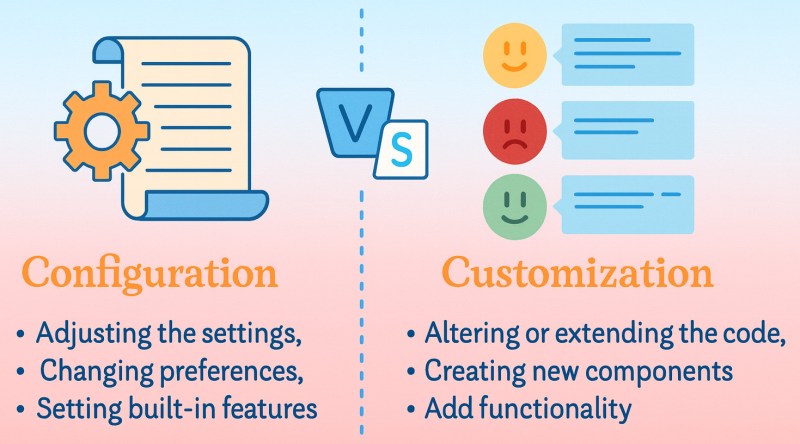
Comparative Analysis
| Criteria | Proprietary Solutions vs. Customization Best Third Party Alternatives |
|---|---|
| Flexibility | Limited to vendor-defined features; third-party tools offer granular control (e.g., custom CSS in Squarespace vs. Shopify themes). |
| Integration Complexity | Native integrations are seamless, but third-party tools may require API management or middleware (e.g., Zapier for non-native app connections). |
| Cost Structure | Upfront licensing fees vs. subscription-based or pay-per-use models (e.g., $20/month for a CRM plugin vs. $10K for a custom ERP). |
| Long-Term Viability | Vendor lock-in risks vs. modularity (e.g., switching from Salesforce to HubSpot is easier with third-party data migrators). |
Future Trends and Innovations
The next frontier for customization best third party alternatives lies in AI and automation. Tools like GitHub Copilot for code generation or AI-driven design plugins (e.g., Midjourney integrations) will blur the line between customization and automation. Meanwhile, edge computing will enable real-time customization (e.g., IoT devices adapting to user behavior without cloud latency).Regulatory challenges—such as GDPR compliance for data-driven customization—will also shape the landscape. Enterprises must prioritize tools that offer built-in compliance features (e.g., encrypted third-party analytics). The future belongs to solutions that balance innovation with governance, ensuring customization best third party alternatives remain both powerful and responsible.

Conclusion
The landscape of customization best third party alternatives is defined by its adaptability—yet success hinges on deliberate selection. Not every tool is created equal; the best alternatives align with specific needs, whether it’s a developer’s need for API flexibility or a marketer’s demand for campaign automation. The key is to treat third-party customization as a strategic asset, not a tactical workaround.As systems grow more interconnected, the role of customization best third party alternatives will only expand. The organizations that thrive will be those that master the art of integration—balancing creativity with pragmatism, innovation with stability. The tools are here; the question is how to wield them effectively.
Comprehensive FAQs
Q: What are the most common industries using customization best third party alternatives?
Industries like e-commerce (Shopify apps), gaming (Unity/Unreal plugins), SaaS (Slack/Zapier integrations), and healthcare (EHR-compatible tools) rely heavily on third-party customization. Even sectors like manufacturing use IoT platforms (e.g., Siemens MindSphere) to extend ERP capabilities.
Q: How do I evaluate the security risks of third-party customization tools?
Assess tools based on:
1. Data Handling: Does the tool encrypt data in transit/rest? (e.g., GDPR-compliant analytics).
2. Vendor Reputation: Check reviews for breaches (e.g., avoid tools with known vulnerabilities).
3. Access Controls: Ensure role-based permissions limit exposure (e.g., admin-only API keys).
4. Audit Trails: Log all third-party interactions for compliance.
Prioritize tools with SOC 2 or ISO 27001 certifications.
Q: Can I customize a proprietary software system without third-party tools?
Limitedly. Proprietary systems (e.g., Adobe Creative Cloud) often restrict deep customization to prevent instability. Workarounds include:
Q: What’s the difference between a plugin and an API for customization?
Q: How do I future-proof my customization strategy?
1. Modular Design: Build systems around APIs/microservices to swap tools easily.
2. Vendor Agreements: Negotiate SLAs for critical third-party tools.
3. Skill Development: Train teams on emerging tools (e.g., AI plugins).
4. Documentation: Maintain a customization inventory to track dependencies.
5. Backup Plans: Identify fallback tools (e.g., if a CRM plugin fails, have a data export plan).
Future-proofing means treating customization as a dynamic, not static, process.
Leave a Comment
Comments are moderated before appearing. The data you submit is processed according to the Privacy Policy of Sac.