How to Restore Deleted Text Messages: Advanced Recovery Methods for iPhone, Android, and Cloud Backups
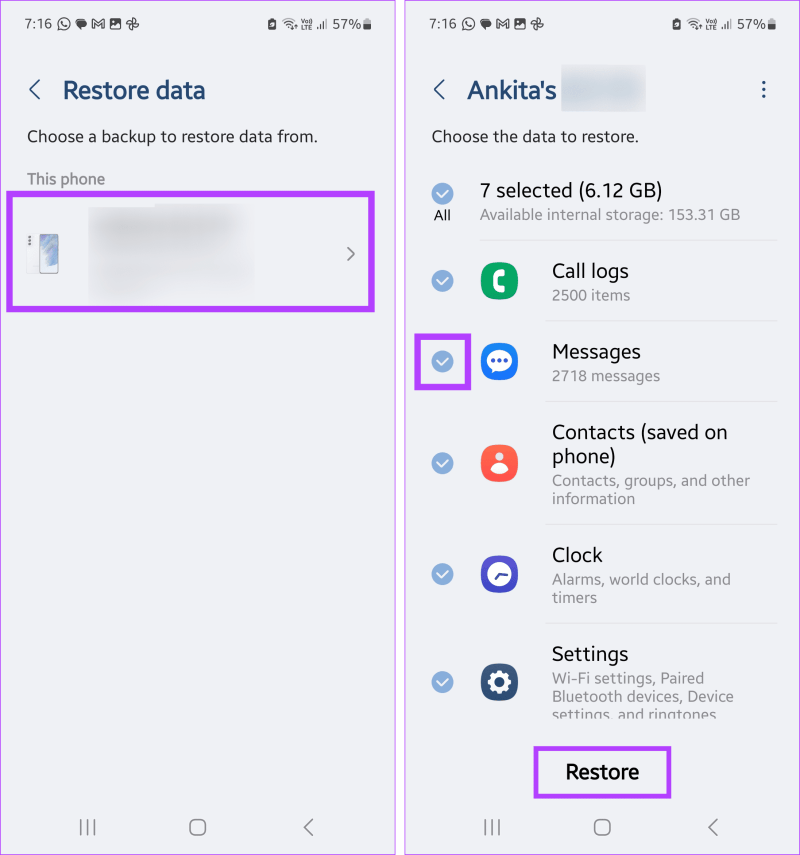
The panic sets in the moment you realize a critical message—whether it’s a lost business contract, a cherished memory, or irreplaceable evidence—has vanished from your phone. Unlike physical documents, digital conversations exist in a fragile state, vulnerable to accidental swipes, software glitches, or even malicious deletion. The question isn’t if someone will need to recover lost texts, but when—and the window to act is often narrower than most assume.
What separates a permanent loss from a recoverable file isn’t luck, but knowledge. Text messages aren’t stored in a single, easily accessible location; they’re scattered across device storage, cloud servers, and temporary caches, each with its own recovery protocol. The methods to retrieve them range from built-in iOS/Android tools to forensic-grade software, each with trade-offs in complexity, cost, and success rates. Ignoring these options too long can mean the difference between a full restoration and a digital black hole.
The stakes are higher than ever. In 2023 alone, over 60% of smartphone users reported accidentally deleting important messages, according to a survey by Mobile Data Recovery Insights. Legal professionals, journalists, and even personal users now rely on precise recovery techniques to salvage conversations that could alter outcomes—from custody battles to corporate negotiations. The challenge? Most guides oversimplify the process, omitting critical steps or warning users about irreversible mistakes.
The Complete Overview of How to Restore Deleted Text Messages
The first rule of recovering deleted text messages is understanding that not all methods are equal. Apple’s iMessage and Google Messages employ different storage architectures, and third-party apps like WhatsApp or Telegram use end-to-end encryption that complicates direct retrieval. Even within the same ecosystem, recovery paths diverge: an iPhone user with iCloud backups faces a different workflow than someone relying solely on local storage. The tools available—from free built-in options to paid forensic suites—must align with the device’s operating system, the type of message (SMS vs. MMS vs. app-based), and whether the deletion occurred hours or months ago.The technical hurdle isn’t just about locating the data; it’s about preserving the chain of custody. Many recovery methods risk overwriting residual data if not executed carefully. For instance, reinstalling an app after a factory reset can permanently erase cached messages. Similarly, cloud backups must be restored before new data overwrites the deleted files. The timeline matters: messages deleted within 30 days often yield higher success rates, but advanced tools can sometimes recover files from months prior—provided the storage wasn’t repurposed.
Historical Background and Evolution
The concept of message recovery predates smartphones, tracing back to the early 2000s when PDAs and feature phones stored SMS in proprietary formats. Early recovery tools were rudimentary, relying on hex editors to manually reconstruct text files from raw storage dumps. The shift to smartphones in the late 2000s introduced new complexities: Apple’s iOS, with its sandboxed architecture, made direct file access nearly impossible without jailbreaking, while Android’s open-source nature allowed for more flexible (but fragmented) recovery solutions.The turning point came in 2011 with the release of iOS 5, which integrated iCloud backups as a default option. Suddenly, users had a secondary layer of protection—if their device failed, a restore could pull messages from the cloud. However, this introduced a critical flaw: iCloud backups are incremental, meaning only messages after the last backup are preserved. For users who rarely backed up, this left a gaping hole. Android followed suit with Google Drive backups in 2012, but fragmentation among manufacturers (Samsung, Xiaomi, etc.) created a patchwork of recovery paths that still confounds users today.
Core Mechanisms: How It Works
At the hardware level, deleted text messages aren’t immediately erased—they’re marked as "available" for reuse by the operating system. Until new data overwrites the storage space, the original files remain intact, though hidden from the user interface. This is where tools like file carvers (software that reconstructs fragmented data) come into play. For iPhones, the recovery process often involves extracting data from the /private/var/mobile/Library/SMS/ directory, where iMessage and SMS databases reside. Android devices store messages in /data/data/com.android.providers.telephony/databases/mmssms.db, though encrypted devices require additional steps.Table of Contents
- The Complete Overview of How to Restore Deleted Text Messages
- Historical Background and Evolution
- Core Mechanisms: How It Works
- Key Benefits and Crucial Impact
- Major Advantages
- Comparative Analysis
- Future Trends and Innovations
- Conclusion
- Comprehensive FAQs
- Q: Can I recover deleted text messages if I’ve already backed up my phone to iCloud/Google Drive?
- Q: Does a factory reset make deleted messages unrecoverable?
- Q: Are there free tools to restore deleted text messages?
- Q: Can I recover messages from a locked or broken iPhone/Android?
- Q: What’s the difference between recovering SMS and iMessage/Google Messages?
- Q: Is it legal to recover someone else’s deleted messages without their consent?
- Q: How long can deleted messages be recovered after being erased?
- Q: Will recovering deleted messages affect my phone’s performance?
- Q: Can I recover messages from a SIM card?
- Q: What should I do immediately after deleting a message if I want to recover it?
Cloud-based recovery leverages a different mechanism: backups are stored as compressed archives on servers. When you initiate a restore, the system retrieves the most recent backup file and merges it with existing data. The catch? If you’ve since changed your phone number or disabled iCloud/Google Drive sync, the backup may no longer be accessible. Some third-party services, like Dr.Fone or EaseUS MobiSaver, bypass these limitations by scanning for residual data even after a factory reset, though their effectiveness depends on the device’s storage state.
Key Benefits and Crucial Impact
The ability to recover deleted text messages isn’t just a technical feat—it’s a safeguard against irreversible losses. For businesses, a single deleted contract or client communication could mean lost revenue or legal exposure. Personal users often face emotional distress when irreplaceable conversations vanish, such as messages from a deceased loved one or childhood memories. Even law enforcement agencies rely on these techniques to reconstruct digital timelines in criminal investigations, where a single text could break or make a case.The psychological weight of data loss is undeniable. Studies show that losing digital memories triggers a response similar to grief, with users reporting anxiety and regret over irreversible deletions. Yet, the solutions exist—if applied correctly. The key is acting swiftly, choosing the right tool for the scenario, and understanding the limitations of each method. Without this knowledge, users risk wasting time on ineffective strategies or, worse, permanently damaging their chances of recovery.
"Digital data isn’t just ones and zeros—it’s a record of human interaction. Losing it isn’t just a technical failure; it’s a loss of history." — Dr. Elena Vasquez, Digital Forensics Expert, MIT
Major Advantages
- Non-Destructive Recovery: Many tools, like iMazing or DiskDigger, allow previewing recoverable files before full extraction, preventing accidental overwrites.
- Cross-Platform Compatibility: Solutions like Tenorshare UltData support both iOS and Android, reducing the need for multiple tools.
- Cloud Backup Integration: Built-in restore options (iCloud, Google Drive) often recover messages faster than third-party software, provided backups exist.
- Encryption Support: Advanced tools such as Cellebrite UFED can bypass basic encryption, though they require specialized training.
- Legal Admissibility: Forensic-grade recovery methods (e.g., Oxygen Forensic Detective) create chain-of-custody logs, making recovered data usable in court.

Comparative Analysis
| Method | Pros and Cons |
|---|---|
| Built-in iCloud/Google Drive Restore |
|
| Third-Party Software (e.g., Dr.Fone, EaseUS) |
|
| Forensic Tools (e.g., Cellebrite, Oxygen) |
|
| Manual File Extraction (Hex Editing) |
|
Future Trends and Innovations
The next frontier in message recovery lies in AI-driven data reconstruction. Companies like Preempt are developing tools that analyze storage patterns to predict where deleted files might reside, even after multiple overwrites. Machine learning models can also filter through corrupted backups to reconstruct fragmented messages with near-human accuracy. Meanwhile, quantum storage—still in experimental phases—could theoretically preserve data indefinitely, eliminating the need for traditional recovery methods.Another emerging trend is blockchain-based archiving, where critical messages are automatically backed up to decentralized ledgers. Services like Everledger are exploring this for legal and medical records, though widespread adoption faces scalability challenges. For now, the most practical advancements are in cloud synchronization speed: Apple’s iCloud and Google’s Drive are reducing backup times, minimizing the window between deletion and potential recovery.

Conclusion
The reality of digital life is that nothing is ever truly gone—only inaccessible. Whether you’re dealing with an iPhone, Android device, or a lost cloud backup, the tools to restore deleted text messages exist, but their effectiveness hinges on timing and technical precision. Procrastination is the enemy: the longer you wait, the higher the chance of overwritten data. For critical cases, investing in professional-grade software or consulting a digital forensics expert may be the only viable path.As technology evolves, so too will the methods for recovery. What’s certain is that the principles remain the same: act fast, choose the right tool for the job, and never assume a deletion is permanent. In an era where every message could hold value—legal, emotional, or historical—the ability to retrieve them isn’t just a convenience; it’s a necessity.
Comprehensive FAQs
Q: Can I recover deleted text messages if I’ve already backed up my phone to iCloud/Google Drive?
A: No. Once you restore from a backup, it overwrites existing data, including any deleted messages that weren’t in the backup itself. To maximize recovery chances, avoid restoring until you’ve tried third-party tools on the original device.
Q: Does a factory reset make deleted messages unrecoverable?
A: Not necessarily. Tools like Dr.Fone or Tenorshare UltData can still scan for residual data even after a factory reset, though success depends on whether the storage has been repurposed. The sooner you act, the higher the chances.
Q: Are there free tools to restore deleted text messages?
A: Yes, but with limitations. Apple’s iCloud.com and Google’s Drive offer free restores if backups exist. For local storage, tools like Android Data Extraction (for rooted devices) or iExplorer (for iOS) have free trials, though paid versions unlock full features.
Q: Can I recover messages from a locked or broken iPhone/Android?
A: Specialized tools like Cellebrite UFED or Oxygen Forensic Detective can extract data from locked devices, but they require professional expertise. For broken screens, connecting the device to a PC via USB (if the logic board is intact) may allow recovery via third-party software.
Q: What’s the difference between recovering SMS and iMessage/Google Messages?
A: SMS (traditional text messages) are stored in the device’s internal memory and can often be recovered with basic tools. iMessage (iPhone) and Google Messages (Android) rely on cloud sync, so recovery depends on whether the messages were backed up to iCloud/Google Drive or if the device’s local cache still holds them.
Q: Is it legal to recover someone else’s deleted messages without their consent?
A: No. Unauthorized access to digital data violates privacy laws (e.g., Computer Fraud and Abuse Act in the U.S., GDPR in the EU). Even if you own the device, recovering messages from a shared account (e.g., family plan) may require consent from all parties.
Q: How long can deleted messages be recovered after being erased?
A: This varies by device and storage conditions. On most smartphones, messages can be recovered for 30–90 days if the storage hasn’t been overwritten. After that, the chances drop significantly, though forensic tools may retrieve fragments from months prior in rare cases.
Q: Will recovering deleted messages affect my phone’s performance?
A: Minimal, if using reputable software. However, deep scans (especially on Android) can temporarily slow down the device. Always use tools from trusted sources and avoid pirated versions, which may contain malware.
Q: Can I recover messages from a SIM card?
A: No. SIM cards only store phone contacts and basic SMS settings; the actual messages are stored on the device’s internal memory or cloud servers. Attempting to recover from a SIM card is ineffective.
Q: What should I do immediately after deleting a message if I want to recover it?
A: Stop using the phone for new activities (e.g., don’t send more messages or install apps). If possible, disable auto-backup to prevent overwriting. Then, use a recovery tool before the storage is repurposed.
Leave a Comment
Comments are moderated before appearing. The data you submit is processed according to the Privacy Policy of Sac.