What Are Electrons: The Tiny Particles Powering Our Universe

The Complete Overview of Electrons
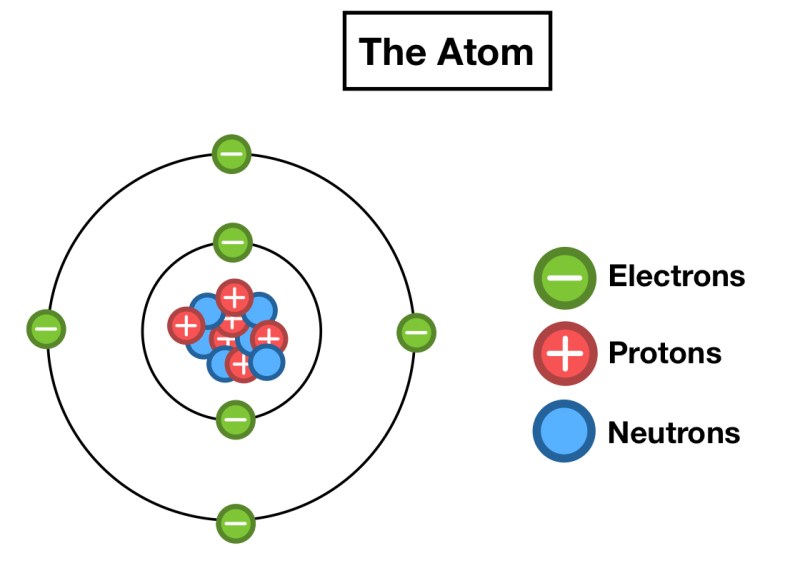
Electrons are subatomic particles that orbit the nucleus of an atom, carrying a negative electric charge. These minuscule entities play a fundamental role in nearly every physical process we observe, from the glow of a light bulb to the complex reactions within our cells. Understanding what electrons are reveals the invisible forces that govern matter, energy, and the very fabric of reality itself.
At first glance, electrons might seem simple—just tiny negatively charged particles zipping around atomic nuclei. However, their behavior defies classical intuition, requiring the principles of quantum mechanics to describe their probabilistic nature and wave-particle duality. This duality means electrons can behave both like discrete particles and like waves, depending on how they're observed—a phenomenon that continues to challenge scientists and philosophers alike.
The significance of electrons extends far beyond textbook diagrams. They are the primary carriers of electricity in conductors, the mediators of chemical bonds, and the building blocks of technologies ranging from smartphones to MRI machines. Without electrons, there would be no light, no chemistry, and no life as we know it. Their ubiquitous presence makes them one of the most studied and essential components of the physical world.
Historical Background and Evolution
The journey to understand what electrons are began in the late 19th century with J.J. Thomson's groundbreaking experiments with cathode rays in 1897. Thomson discovered that these rays were composed of particles much smaller than atoms, which he initially called "corpuscles." This revelation shattered the prevailing belief that atoms were indivisible, marking the birth of particle physics and fundamentally changing our understanding of matter.Shortly after, Ernest Rutherford's gold foil experiment in 1909 provided further insight into atomic structure, revealing the dense nucleus at the center of the atom. However, it was Niels Bohr who, in 1913, proposed a revolutionary model where electrons orbited the nucleus in fixed energy levels. This quantization of electron orbits laid the groundwork for quantum theory, even though later developments would show that electrons don't follow neat circular paths but instead exist in probability clouds known as orbitals.
As scientific tools advanced, so did our comprehension of electron behavior. The development of quantum mechanics in the 1920s, spearheaded by figures like Schrödinger, Heisenberg, and Pauli, introduced mathematical frameworks that could predict electron positions and energies with remarkable accuracy. Today, electron microscopy, scanning tunneling microscopy, and other cutting-edge techniques allow researchers to manipulate individual electrons, pushing the boundaries of what we thought possible about these elusive particles.
Core Mechanisms: How It Works
Electrons exist in a delicate balance governed by electromagnetic forces. Within an atom, the positively charged nucleus exerts an attractive force on the negatively charged electrons, preventing them from flying away while simultaneously keeping them from collapsing into the nucleus due to their kinetic energy. This dynamic equilibrium creates stable electron configurations that determine an element's chemical properties and reactivity.In conductors like metals, electrons are loosely bound to atoms, forming a "sea" of free-moving charge carriers. When a voltage is applied across such materials, these mobile electrons flow in response to the electric field, creating an electric current. This movement of electrons is the foundation of all electronic devices, from simple circuits to complex computer processors, enabling the rapid transfer and processing of information.
Key Benefits and Crucial Impact
The influence of electrons permeates virtually every aspect of modern life and scientific inquiry. From enabling the flow of electricity that powers our homes to facilitating the chemical reactions that sustain biological processes, electrons are indispensable agents of change and connection in the universe. Their unique properties make them ideal for transmitting energy, information, and force across vast scales—from the microscopic workings of enzymes to the macroscopic operation of power grids.Table of Contents
- The Complete Overview of Electrons
- Historical Background and Evolution
- Core Mechanisms: How It Works
- Key Benefits and Crucial Impact
- Major Advantages
- Comparative Analysis
- Future Trends and Innovations
- Conclusion
- Comprehensive FAQs
- Q: What exactly are electrons made of?
- Q: Do electrons orbit the nucleus like planets around the sun?
- Q: Why do electrons have negative charges?
- Q: Can electrons move freely outside of atoms?
- Q: How do electrons contribute to electricity?
- Q: Are electrons affected by magnetic fields?
- Q: What is the mass of an electron?
Beyond their practical applications, electrons have also expanded our theoretical horizons. Their quantum mechanical nature has led to innovations in computing, cryptography, and materials science, while challenging our understanding of fundamental physics. As we continue to explore the deeper implications of what electrons are and how they behave, we uncover new possibilities for technological advancement and scientific discovery.
"Electrons are not things but events. Their reality lies in the patterns of their interactions, not in any static form." — Physicist David Bohm
Major Advantages
- Enable electrical conductivity in metals and semiconductors, forming the basis of all electronic devices.
- Mediate chemical bonding through shared or transferred electron pairs, allowing for the diversity of molecular structures.
- Carry energy in the form of electric current, making possible lighting, heating, and motor operations.
- Participate in electromagnetic radiation emission and absorption, crucial for spectroscopy and optical technologies.
- Serve as probes in advanced imaging techniques like electron microscopy, revealing atomic-scale details of materials.
Comparative Analysis
| Aspect | Electrons vs. Protons |
|---|---|
| Charge | Electrons carry negative charge; protons carry positive charge of equal magnitude. |
| Mass | Electrons are approximately 1,836 times lighter than protons. |
| Location | Electrons occupy orbitals around the nucleus; protons reside within the nucleus. |
| Role in Chemistry | Electrons determine bonding and reactivity; protons influence nuclear stability and isotope identity. |
Future Trends and Innovations
Looking ahead, the study of what electrons are and how they function promises to unlock transformative technologies. Quantum computing, which relies on the superposition and entanglement of electrons in quantum bits (qubits), stands poised to revolutionize fields like cryptography, drug design, and artificial intelligence. Researchers are actively exploring ways to harness electron spin—known as spintronics—for faster, more efficient data storage and processing systems that could surpass current silicon-based limits.Meanwhile, advances in nanotechnology are enabling scientists to engineer materials with tailored electronic properties at the atomic level. Graphene, quantum dots, and other novel materials owe their extraordinary characteristics to precise control over electron behavior. As our ability to manipulate individual electrons improves, we may see breakthroughs in renewable energy, medical diagnostics, and even revolutionary computing architectures that blur the line between classical and quantum worlds.

Conclusion
Electrons remain among the most fascinating and vital components of our physical reality. Though invisible to the naked eye, their effects are omnipresent—powering our devices, driving chemical reactions, and illuminating our understanding of the natural world. By continuing to investigate what electrons are and how they interact, we not only deepen our scientific knowledge but also pave the way for innovations that could reshape society.As research progresses, the line between fundamental science and applied technology grows ever thinner. Whether through quantum leaps in computing capability or subtle shifts in material performance, electrons will undoubtedly continue to play a central role in humanity's quest to comprehend and harness the forces of nature.
Comprehensive FAQs
Q: What exactly are electrons made of?
A: Electrons are elementary particles, meaning they are not composed of smaller constituents. They are considered fundamental in the Standard Model of particle physics, alongside quarks, photons, and other basic entities.
Q: Do electrons orbit the nucleus like planets around the sun?
A: No, this was the early Bohr model. In reality, electrons exist in regions called orbitals—probability clouds where they are most likely to be found. Their exact location and path cannot be precisely determined due to the uncertainty principle.
Q: Why do electrons have negative charges?
A: The negative charge of electrons is a fundamental property, much like mass or spin. It arises from their intrinsic quantum characteristics and is essential for maintaining the balance of forces within atoms.
Q: Can electrons move freely outside of atoms?
A: Yes, in conductive materials, electrons can move freely between atoms, creating an electric current when influenced by an external voltage or electric field.
Q: How do electrons contribute to electricity?
A: Electrons carry electric charge. In circuits, their controlled movement constitutes an electric current, which powers everything from household appliances to industrial machinery.
Q: Are electrons affected by magnetic fields?
A: Absolutely. Moving electrons generate magnetic fields, and external magnetic fields can alter their trajectories—a principle used in devices like cathode ray tubes, particle accelerators, and MRI machines.
Q: What is the mass of an electron?
A: The rest mass of an electron is approximately 9.109 × 10^-31 kilograms, making it roughly 1,836 times lighter than a proton.
Leave a Comment
Comments are moderated before appearing. The data you submit is processed according to the Privacy Policy of Sac.