How to Use Google Maps Offline Download for Seamless Navigation
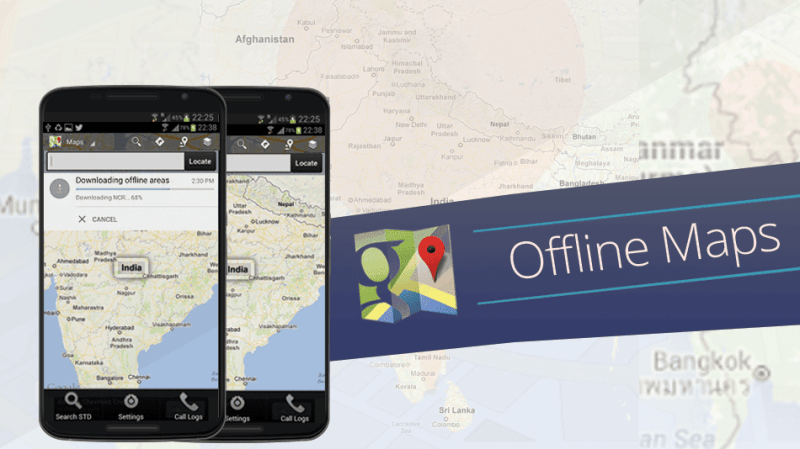
Google Maps has redefined navigation, but its offline capabilities remain underutilized by most users. Whether you're traversing a metropolis with spotty connectivity, exploring remote wilderness, or simply avoiding data charges, the ability to download Google Maps offline transforms it from a convenience into a necessity. The feature isn’t just about accessing maps without Wi-Fi—it’s about precision, reliability, and control over your digital environment. For professionals, travelers, and tech-savvy users, this functionality bridges the gap between online and offline worlds, ensuring seamless transitions between connected and disconnected states.
The process of saving maps for offline use has evolved significantly since its inception. Early iterations were clunky, limited to static downloads with poor resolution or outdated data. Today, Google’s algorithm optimizes storage, updates content dynamically, and integrates with real-time traffic data—even when offline. Yet, despite these advancements, many users remain unaware of the full scope of what Google Maps offline download can achieve. From customizing download regions to managing storage efficiently, the feature demands a nuanced understanding to unlock its full potential.
What separates a basic offline map from a strategic tool? The difference lies in preparation. A well-configured offline map isn’t just a backup—it’s a curated resource tailored to specific needs. Whether you’re a commuter avoiding urban congestion, a researcher mapping fieldwork sites, or a digital nomad navigating unfamiliar cities, the ability to preload maps ensures you’re never left stranded by a dead zone. The question isn’t whether you need offline access; it’s how you can leverage it to work smarter, travel safer, and stay connected when the internet fails.
The Complete Overview of Google Maps Offline Download
The Google Maps offline download feature is a cornerstone of modern navigation, designed to provide access to maps, directions, and basic search functionality without an active internet connection. Unlike traditional GPS devices that rely on proprietary hardware, Google Maps leverages cloud-based data and user-generated updates to deliver real-time accuracy—even when offline. This dual-mode capability (online/offline) ensures that users aren’t locked into a binary choice between connectivity and autonomy. The feature is particularly valuable in regions with unreliable infrastructure, where signal drops can turn a simple trip into a logistical challenge.
At its core, the system works by caching map tiles, points of interest (POIs), and routing data locally on a user’s device. When a download is initiated, Google Maps segments the selected area into a grid of tiles (typically 256x256 pixels each) and compresses them for efficient storage. The app then prioritizes high-traffic or frequently accessed regions, ensuring that critical information remains accessible even if the device’s storage is constrained. Updates to offline maps are handled via background sync when the device reconnects to the internet, though the frequency of these updates depends on user settings and data availability.
Historical Background and Evolution
The concept of offline mapping predates Google Maps, with early implementations appearing in dedicated GPS units like Garmin’s handheld devices. These systems relied on preloaded maps stored on proprietary cartridges or internal memory, offering limited flexibility and high costs for updates. Google’s entry into the space in 2011 with its offline feature marked a shift toward cloud-integrated solutions. Initially, users could download entire cities, but the process was slow and storage-intensive, often requiring multiple gigabytes for a single region. Over time, Google refined the algorithm to prioritize essential data, reducing download sizes while maintaining usability.
Table of Contents
- The Complete Overview of Google Maps Offline Download
- Historical Background and Evolution
- Core Mechanisms: How It Works
- Key Benefits and Crucial Impact
- Major Advantages
- Comparative Analysis
- Future Trends and Innovations
- Conclusion
- Comprehensive FAQs
- Q: How much storage does a Google Maps offline download require?
- Q: Can I download maps for multiple devices using the same Google account?
- Q: Why does my offline map show outdated traffic data?
- Q: How often do offline maps update automatically?
- Q: Is there a way to download only specific POIs (e.g., gas stations, hospitals) without full regions?
- Q: What should I do if my offline map is corrupted or missing data?
- Q: Can I use offline maps for navigation in airplanes or submarines?
- Q: Does downloading offline maps consume mobile data?
- Q: Are there any legal restrictions on downloading maps for certain countries?
- Q: How can I free up storage used by offline maps?
Key milestones in the feature’s evolution include the introduction of vector-based maps in 2018, which replaced raster images with scalable, data-efficient graphics. This change allowed for higher-resolution displays on high-DPI screens and reduced storage requirements by up to 50%. Additionally, the integration of Google’s AI-driven traffic predictions—even in offline mode—enhanced the feature’s practicality. Today, the Google Maps offline download system is a hybrid of static and dynamic data, blending preloaded tiles with real-time updates fetched during brief online intervals. This evolution reflects broader trends in digital mapping, where cloud synchronization and edge computing are redefining offline experiences.
Core Mechanisms: How It Works
The technical backbone of Google Maps offline download involves a multi-layered caching system. When a user selects an area for offline storage, the app queries Google’s global map database to fetch the latest tiles, POIs, and routing information. These elements are then compressed using algorithms like WebP for images and Protocol Buffers for structured data. The compressed files are stored in the device’s internal memory or external storage (if supported), organized into a hierarchical directory structure that mirrors the map’s geographic layout. This structure enables quick access during navigation, as the app can retrieve tiles on-demand without full decryption.
One of the most critical aspects of the mechanism is the handling of updates. Offline maps aren’t static; they receive incremental updates when the device reconnects to the internet. Google uses differential updates to minimize data usage, transmitting only the changes since the last sync. For example, if a new road is added or a POI is updated, only the affected tiles are refreshed. This approach ensures that users always have the most current information without requiring a full redownload. Additionally, the app employs predictive caching, anticipating user movements (e.g., during a trip) to preload adjacent regions, further optimizing performance.
Key Benefits and Crucial Impact
The practical advantages of Google Maps offline download extend beyond mere convenience. For travelers, it eliminates the frustration of dead zones in rural areas or foreign countries where roaming charges are prohibitive. In professional settings, field researchers, surveyors, and emergency responders rely on offline maps to document remote locations without signal interference. Even in urban environments, the feature provides a fallback during network outages, ensuring that critical navigation data remains accessible. The impact isn’t just functional—it’s transformative, turning potential disruptions into opportunities for productivity and safety.
Beyond individual use cases, the feature has broader implications for digital accessibility. In regions with limited infrastructure, offline maps democratize access to geographic information, bridging the digital divide. For example, in parts of Africa or Southeast Asia where internet penetration is uneven, preloaded maps enable farmers to navigate to markets, students to locate educational resources, and healthcare workers to reach remote villages. The Google Maps offline download system thus serves as a tool for social equity, aligning with Google’s broader mission to organize the world’s information and make it universally accessible.
"Offline navigation isn’t just about maps—it’s about autonomy. When you can’t rely on the cloud, you rely on yourself, and that’s where Google Maps offline download shines."
— Dr. Elena Vasquez, Geospatial Data Researcher, Stanford University
Major Advantages
- Uninterrupted Navigation: Access turn-by-turn directions, transit routes, and walking paths without internet dependency, critical for long trips or areas with poor coverage.
- Storage Efficiency: Modern compression techniques allow users to download entire cities or regions in as little as 1GB, with updates requiring minimal additional space.
- Real-Time Offline Traffic: While basic traffic data is offline, Google’s predictive algorithms provide estimated travel times based on historical patterns, even without live updates.
- Customizable Downloads: Users can define precise boundaries (e.g., a 5km radius around a hotel) or download entire countries, tailoring storage to specific needs.
- Cross-Platform Sync: Offline maps downloaded on a phone can be accessed on a tablet or computer via Google Maps on the web, provided the device is signed into the same account.

Comparative Analysis
| Feature | Google Maps Offline Download | Competitor (e.g., Apple Maps, Waze) |
|---|---|---|
| Download Size | 1GB–5GB per region (optimized for detail) | Varies; Apple Maps often requires larger downloads for high-resolution tiles. |
| Update Frequency | Automatic incremental updates when online | Manual or infrequent; Waze relies on community updates but lacks structured offline sync. |
| Traffic Data Offline | Predictive estimates (no live data) | Limited or nonexistent; Apple Maps provides basic congestion info but not offline. |
| Cross-Device Access | Yes (via Google account sync) | No; Apple Maps offline content is device-specific. |
Future Trends and Innovations
The next generation of Google Maps offline download is poised to integrate machine learning for dynamic region selection. Current systems rely on user-defined boundaries, but future iterations may use AI to predict optimal download areas based on behavior patterns (e.g., commuting routes, tourism hotspots). This proactive approach could reduce manual input while ensuring users always have relevant maps. Additionally, advancements in edge computing may enable offline access to augmented reality (AR) navigation, where maps are overlaid in real-time using device cameras—without requiring an internet connection for the core data.
Another emerging trend is the fusion of offline maps with offline search functionality. While Google Maps currently allows offline directions, expanding this to include business searches, reviews, and even transit schedules would mirror the full online experience. For example, a user could search for "coffee shops" in an offline-downloaded city and receive a list of venues with offline-stored ratings. This would blur the line between online and offline utility, making the feature indispensable for users in low-connectivity environments. As 5G and satellite internet expand, the focus may shift toward hybrid models, where offline maps serve as a primary resource with occasional cloud syncs for critical updates.

Conclusion
The Google Maps offline download feature is more than a technical workaround—it’s a testament to how digital tools can adapt to real-world constraints. Whether you’re a globetrotter, a fieldworker, or simply someone who values reliability, the ability to access maps without an internet connection is a game-changer. The key to maximizing its potential lies in understanding its limitations and leveraging its strengths: customization, efficiency, and cross-platform utility. As the technology evolves, the line between online and offline navigation will continue to fade, but the core principle remains unchanged—autonomy in a connected world.
For users, the takeaway is clear: don’t treat offline maps as a secondary feature. Instead, integrate them into your workflow as a primary tool. Preload maps before trips, monitor storage usage, and take advantage of syncing options to ensure you’re always prepared. In an era where connectivity is both a luxury and a necessity, Google Maps’ offline capabilities offer a rare balance—reliability without compromise.
Comprehensive FAQs
Q: How much storage does a Google Maps offline download require?
A: Storage needs vary by region. Urban areas (e.g., New York City) typically require 1–3GB, while rural or less-detailed regions may use as little as 500MB. Google optimizes downloads by focusing on high-traffic areas first. To check usage, go to Offline maps in the app’s menu and select Manage downloads.
Q: Can I download maps for multiple devices using the same Google account?
A: Yes. Offline maps are tied to your Google account, so any device signed in with the same account can access them. However, storage is device-specific—downloading on a phone won’t automatically sync to a tablet unless you manually redownload or use Google Drive (for certain map data via third-party tools).
Q: Why does my offline map show outdated traffic data?
A: Offline maps provide predictive traffic estimates based on historical patterns, not live data. If you need real-time updates, ensure your device is online. For critical routes, consider downloading adjacent regions to cross-reference with online traffic layers when reconnected.
Q: How often do offline maps update automatically?
A: Updates occur when your device reconnects to the internet, but the frequency depends on Google’s servers and your settings. To force an update, open the map in offline mode, tap your profile icon, and select Update offline map. For large regions, this may take several minutes.
Q: Is there a way to download only specific POIs (e.g., gas stations, hospitals) without full regions?
A: Not natively. Google Maps offline downloads are region-based, not POI-specific. However, you can minimize storage by downloading smaller areas (e.g., a 10km radius around a hospital) or using third-party tools like OSMAnd, which allows custom POI filtering in offline mode.
Q: What should I do if my offline map is corrupted or missing data?
A: First, try updating the map via the app’s offline menu. If issues persist, delete and redownload the region. For persistent problems, clear the app’s cache (Settings > Apps > Google Maps > Storage > Clear Cache) or reset app preferences. If the map remains unusable, check Google’s status dashboard for outages.
Q: Can I use offline maps for navigation in airplanes or submarines?
A: Offline maps work in low-signal environments like planes (when in airplane mode with cached data), but not in complete signal-blackout zones (e.g., submarines). For extreme conditions, consider dedicated offline GPS apps like Garmin BaseCamp or Navionics, which support more robust offline routing.
Q: Does downloading offline maps consume mobile data?
A: No, downloading maps uses Wi-Fi or cached data but not mobile data. However, updating offline maps or accessing real-time features (e.g., live traffic) will consume data if your device isn’t on Wi-Fi.
Q: Are there any legal restrictions on downloading maps for certain countries?
A: Generally, no—Google Maps allows offline downloads for most regions. However, some countries with restricted access (e.g., North Korea, Crimea) may block or censor map data. Always comply with local laws and avoid using offline maps for unauthorized activities (e.g., military operations).
Q: How can I free up storage used by offline maps?
A: Delete unused maps via the Offline maps menu in the app. For Android, you can also move offline map data to an SD card (if supported) by enabling Storage > Offline maps > Change storage location. On iOS, offline maps are stored in the app’s sandbox and cannot be moved.
Leave a Comment
Comments are moderated before appearing. The data you submit is processed according to the Privacy Policy of Sac.