How to Systematically Boost Productivity: Shortcuts, Automation, and Efficiency Workflow Secrets

Productivity isn’t about working harder—it’s about working smarter. The most effective professionals don’t rely on brute-force discipline; they leverage shortcuts automation mastering efficiency workflow to eliminate cognitive load and redirect focus toward high-impact decisions. These systems aren’t just for tech-savvy early adopters—they’re foundational to modern workflow design, whether you’re managing a remote team, running a solo business, or navigating a high-pressure role.
The problem? Most people treat automation as a one-time setup rather than an iterative process. They install a tool, tweak a few settings, and assume the work is done—only to find themselves drowning in manual adjustments later. True shortcuts automation mastering efficiency workflow requires a structured approach: identifying friction points, mapping dependencies, and embedding adaptability into systems so they evolve with your needs.
Consider this: A surgeon doesn’t memorize every possible incision—she relies on pre-optimized instruments, standardized protocols, and real-time feedback loops. The same principle applies to knowledge work. The difference between a chaotic inbox and a seamless pipeline isn’t talent; it’s the deliberate application of automation efficiency workflows that anticipate bottlenecks before they arise.
The Complete Overview of Shortcuts, Automation, and Efficiency Workflows
The term shortcuts automation mastering efficiency workflow refers to a multi-layered approach where repetitive tasks are systematically eliminated, decision-making is streamlined, and human effort is redirected toward creative or strategic activities. This isn’t about replacing human judgment with algorithms—it’s about augmenting it. The goal is to create a feedback loop where automation handles the predictable, while humans focus on the ambiguous.
At its core, this methodology blends three disciplines: task optimization (identifying inefficiencies), automation engineering (designing scalable solutions), and workflow architecture (ensuring systems adapt to change). The most successful implementations treat automation as a living system—not a static toolset. For example, a sales team might automate lead qualification with AI, but the real efficiency gain comes from integrating that data into a dynamic CRM that updates in real time, reducing manual data entry by 87%.
Historical Background and Evolution
The roots of shortcuts automation mastering efficiency workflow trace back to the Industrial Revolution, when mechanization first replaced manual labor. However, the modern iteration emerged in the late 20th century with the rise of personal computing. Early adopters like Microsoft Office pioneered keyboard shortcuts to accelerate typing, while enterprise software introduced batch processing to handle bulk operations. The real inflection point came in the 2010s with the proliferation of cloud-based tools, APIs, and no-code platforms, which democratized automation beyond IT departments.
Table of Contents
- The Complete Overview of Shortcuts, Automation, and Efficiency Workflows
- Historical Background and Evolution
- Core Mechanisms: How It Works
- Key Benefits and Crucial Impact
- Major Advantages
- Comparative Analysis
- Future Trends and Innovations
- Conclusion
- Comprehensive FAQs
- Q: How do I identify which tasks to automate first?
- Q: What’s the difference between automation and delegation?
- Q: Are there industries where automation isn’t effective?
- Q: How do I ensure my automated workflows don’t become rigid?
- Q: What’s the biggest mistake people make when automating?
- Q: Can small businesses benefit from automation, or is it only for enterprises?
Today, the field has matured into a hybrid of workflow orchestration and human-machine collaboration. Companies like Zapier and Make (formerly Integromat) turned automation from a niche skill into a mainstream competency, while industries from healthcare to finance now rely on rule-based systems to handle compliance, reporting, and predictive analytics. The evolution hasn’t been linear—early adopters often over-automated, creating rigid systems that broke under real-world variability. The current best practice emphasizes modular automation, where workflows are designed as interchangeable components that can be reassembled as needs shift.
Core Mechanisms: How It Works
The mechanics of shortcuts automation mastering efficiency workflow revolve around three pillars: friction reduction, dependency mapping, and feedback integration. Friction reduction involves eliminating unnecessary steps—whether it’s replacing a 10-step approval process with a single-click digital signature or consolidating duplicate tools into a unified platform. Dependency mapping, meanwhile, identifies how tasks interconnect; for instance, a marketing team might realize that their social media scheduling tool, CRM, and analytics platform aren’t communicating, forcing manual data transfers. The solution? Automating the data pipeline between them.
Feedback integration is where most implementations fail. A well-designed automation efficiency workflow doesn’t just execute tasks—it logs performance metrics, flags anomalies, and suggests optimizations. For example, an automated customer support bot might detect a sudden spike in "shipping delay" inquiries and trigger an alert for the logistics team, while simultaneously rerouting affected tickets to a human agent. Without this loop, automation becomes a black box that obscures inefficiencies rather than resolving them.
Key Benefits and Crucial Impact
The primary value of shortcuts automation mastering efficiency workflow lies in its ability to preserve human cognitive bandwidth for what matters. Studies show that the average professional spends 40% of their time on low-value tasks—email filtering, data entry, or repetitive reporting—that could be automated. By reclaiming this time, organizations see a 20–30% boost in output without increasing headcount. Beyond productivity, these systems reduce errors (by eliminating manual data handling), improve compliance (through automated audits), and enhance scalability (by handling growth without proportional effort increases).
Yet the impact isn’t just quantitative. Qualitative benefits include reduced mental fatigue, as workers shift from reactive fire-drilling to proactive strategy, and increased job satisfaction, since mundane tasks no longer dominate the workday. The psychological effect is profound: automation isn’t just about speed—it’s about restoring agency. A developer who spends 12 hours a week writing boilerplate code might resent their role, but one who automates those tasks and focuses on architecture suddenly finds meaning in their work.
"Automation isn’t about replacing humans—it’s about amplifying their potential. The goal isn’t to eliminate jobs; it’s to eliminate the parts of jobs that don’t require human judgment."
Major Advantages
- Time Reclamation: Automating repetitive tasks (e.g., invoice generation, report compilation) can free up 15–25 hours per week for strategic work.
- Error Reduction: Rule-based automation eliminates human oversight mistakes, such as misrouted emails or incorrect data entries.
- Scalability: Systems designed for shortcuts automation mastering efficiency workflow handle increased workloads without proportional effort (e.g., a 10x growth in customers doesn’t require 10x more support staff if chatbots and self-service portals are optimized).
- Data-Driven Insights: Automated logging and analytics reveal hidden patterns (e.g., peak engagement times, common customer pain points) that manual tracking would miss.
- Adaptability: Modular workflows allow quick reconfiguration—for example, switching from a manual approval process to an AI-driven one during peak seasons.
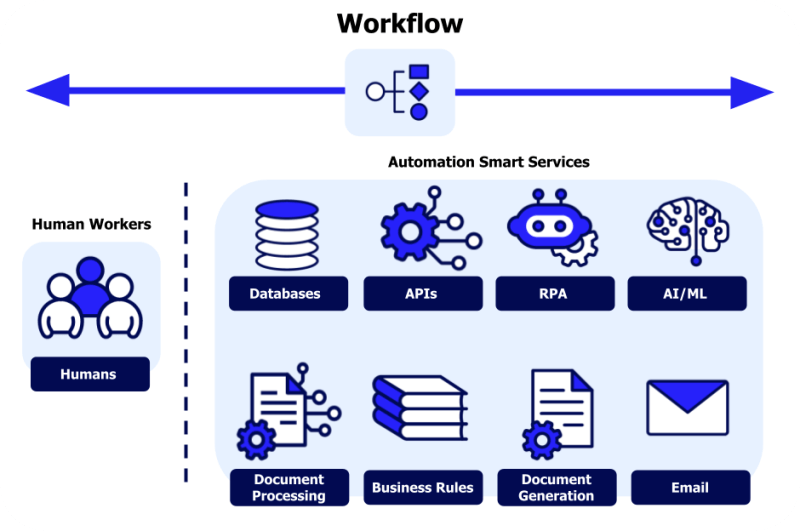
Comparative Analysis
| Traditional Workflow | Automated Efficiency Workflow |
|---|---|
| Manual task execution (e.g., copying data between spreadsheets). | Automated data pipelines with real-time syncing. |
| High cognitive load (e.g., remembering 20+ keyboard shortcuts). | Context-aware shortcuts (e.g., AI-suggested commands based on task type). |
| Bottlenecks at handoffs (e.g., emails lost in CC chains). | Seamless integrations (e.g., Slack messages auto-logged to CRM). |
| Reactive problem-solving (e.g., fixing errors after they occur). | Proactive monitoring (e.g., alerts for anomalies before they escalate). |
Future Trends and Innovations
The next frontier of shortcuts automation mastering efficiency workflow lies in predictive automation—systems that don’t just react to inputs but anticipate needs. For example, AI-powered tools like GitHub Copilot now suggest code completions before developers even type, while smart calendars reschedule meetings based on real-time availability data. The shift is from "automate what’s repetitive" to "automate what’s predictable." This requires deeper integration with machine learning, where workflows adapt not just to rules but to behavioral patterns.
Another emerging trend is collaborative automation, where teams co-design workflows in real time. Platforms like Notion AI or Airtable’s automation builder allow non-technical users to drag-and-drop logic, reducing dependency on IT departments. Meanwhile, the rise of edge computing—processing data locally rather than in the cloud—will enable faster, more secure automation for industries like healthcare or manufacturing. The long-term vision? Workflows that are so intuitive they feel invisible, freeing humans to focus entirely on innovation.

Conclusion
The most efficient professionals don’t chase productivity hacks—they design systems that work for them. Shortcuts automation mastering efficiency workflow isn’t a silver bullet, but it’s the closest thing to one for knowledge workers. The key is to start small: identify one high-impact, repetitive task, automate it, and measure the results. Then iterate. The tools are available; the discipline to refine them is what separates the overwhelmed from the optimized.
Here’s the paradox: The more you automate, the more you realize how much you didn’t know was broken. That’s not a failure—it’s the first step toward building a workflow that truly works for you.
Comprehensive FAQs
Q: How do I identify which tasks to automate first?
A: Prioritize tasks that are repetitive, rule-based, and high-volume. Use the "80/20 Rule" to spot activities consuming the most time with the least strategic value. Tools like time-tracking software (e.g., Toggl) or process mapping (e.g., Lucidchart) can reveal inefficiencies. Start with low-risk automations (e.g., email filters) before tackling complex workflows.
Q: What’s the difference between automation and delegation?
A: Automation replaces manual steps with systems or scripts, while delegation shifts responsibility to another person. For example, automating a report means setting up a scheduled SQL query; delegating it means asking a colleague to run it. Shortcuts automation mastering efficiency workflow favors automation for scalability and consistency, but delegation can be useful for tasks requiring human judgment (e.g., client negotiations).
Q: Are there industries where automation isn’t effective?
A: Automation excels in structured, data-driven environments (e.g., finance, logistics, customer support). However, industries with high variability—like creative design or emergency medicine—benefit more from assistive automation (e.g., AI-generated drafts, predictive diagnostics) rather than full replacement. The goal is augmentation, not substitution.
Q: How do I ensure my automated workflows don’t become rigid?
A: Design for modularity and feedback. Use platforms that support conditional logic (e.g., "If X happens, trigger Y") and regularly audit workflows for bottlenecks. Tools like Zapier’s multi-step zaps or Make’s scenario builder allow easy adjustments. Also, involve end-users in testing—what seems efficient to a developer might frustrate a sales rep.
Q: What’s the biggest mistake people make when automating?
A: Over-automating without measuring impact. Many rush to automate everything, creating complex systems that no one understands or maintains. The solution? Start with one high-impact workflow, track metrics (e.g., time saved, error rates), and expand only if ROI is clear. Avoid "automation for automation’s sake"—every script should solve a specific pain point.
Q: Can small businesses benefit from automation, or is it only for enterprises?
A: Absolutely. Shortcuts automation mastering efficiency workflow scales from solo entrepreneurs to Fortune 500s. Tools like Zapier, Google Apps Script, or even Excel macros can handle basic automations (e.g., auto-invoicing, lead nurturing) at minimal cost. The barrier isn’t budget—it’s mindset. Small businesses often underestimate how much time they waste on manual tasks; automating even one process can be a game-changer.
Leave a Comment
Comments are moderated before appearing. The data you submit is processed according to the Privacy Policy of Sac.