The Hidden Power of a YouTube Audio Downloader in 2024

The internet’s largest audio library isn’t Spotify or Apple Music—it’s YouTube. With over 2 billion monthly listeners tuning into music, podcasts, and spoken-word content, the platform has become an unofficial repository for everything from viral TikTok sounds to niche educational lectures. Yet despite its dominance, YouTube’s built-in audio extraction remains frustratingly restricted. The workaround? A YouTube audio downloader—a category of tools that bridges the gap between streaming and offline ownership.
These utilities don’t just save audio; they redefine how we consume digital content. For musicians analyzing competitors’ tracks, language learners studying accented dialogue, or researchers archiving lectures, the ability to strip away video and isolate audio is a game-changer. But the technology isn’t without controversy. Copyright holders, platform policies, and ethical debates swirl around every download, making the choice of tool—and the method of use—critical decisions.
What separates the reliable YouTube MP3 converters from the sketchy alternatives? How do these tools actually extract audio without violating terms of service? And what’s next for a landscape where AI-generated content and dynamic ad insertion are reshaping how we interact with online audio? The answers lie in understanding the mechanics, weighing the risks, and anticipating the evolution of these digital workarounds.
The Complete Overview of YouTube Audio Downloaders
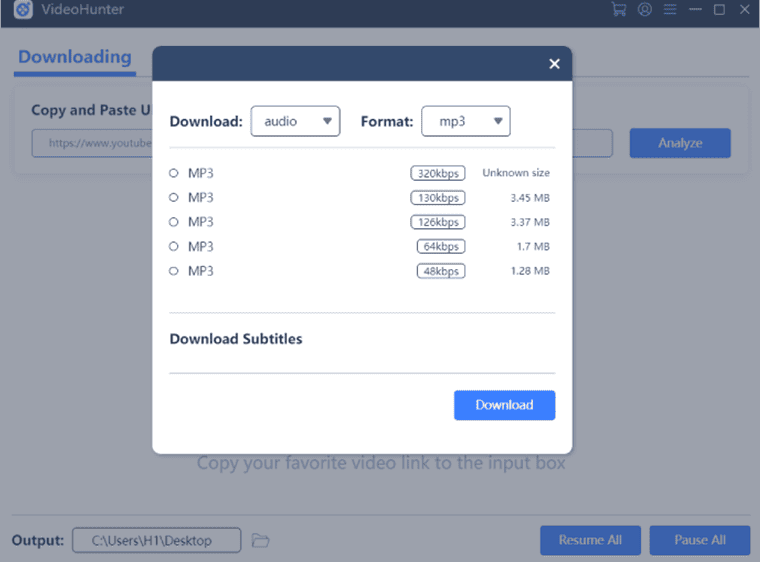
A YouTube audio downloader is a software application or web service designed to convert video content from YouTube into standalone audio files (typically MP3, M4A, or FLAC formats). Unlike traditional media players that play audio directly from the platform, these tools intercept the stream, decode the audio track, and save it locally—often while preserving metadata like artist, album, and timestamps. The process leverages YouTube’s underlying architecture, where audio and video are transmitted as separate streams, allowing for selective extraction.
The term encompasses a broad spectrum of solutions: browser extensions like "4K Video Downloader," standalone desktop applications such as "YTD Video Downloader," and cloud-based services that process files on remote servers. Some specialize in high-fidelity audio (lossless formats), while others prioritize speed and compatibility with mobile devices. The market has also seen a rise in "AI-powered" downloaders that claim to enhance audio quality or remove background noise—though their efficacy remains debated. What unites them all is the core function: converting YouTube’s proprietary video format into a universally playable audio file.
Historical Background and Evolution
The origins of YouTube audio extraction trace back to 2005, when YouTube itself launched as a simple video-sharing platform. Early users quickly realized the site’s potential as an audio source, particularly for musicians and podcasters. The first generation of tools relied on manual methods: copying-pasting URLs into third-party sites or using FFmpeg commands to strip audio from downloaded videos. These approaches were clunky, often requiring technical knowledge, and frequently violated YouTube’s terms of service.
Table of Contents
- The Complete Overview of YouTube Audio Downloaders
- Historical Background and Evolution
- Core Mechanisms: How It Works
- Key Benefits and Crucial Impact
- Major Advantages
- Comparative Analysis
- Future Trends and Innovations
- Conclusion
- Comprehensive FAQs
- Q: Is using a YouTube audio downloader legal?
- Q: Can I download audio from YouTube Premium or Music subscriptions?
- Q: What’s the best audio quality setting for a YouTube audio downloader?
- Q: Do YouTube audio downloaders work on mobile devices?
- Q: How can I remove watermarks or ads from downloaded audio?
- Q: Are there free YouTube audio downloaders without malware?
- Q: Can I use a YouTube audio downloader for educational purposes?
- Q: Why does my YouTube audio downloader keep failing?
- Q: What’s the difference between a YouTube audio downloader and a screen recorder?
- Q: How do I find the best YouTube audio downloader for my needs?
- Q: What happens if YouTube blocks my downloader’s IP?
- Q: Can I use a YouTube audio downloader for music production?
By 2010, the rise of dedicated YouTube MP3 converters marked a turning point. Services like "MP3Skull" and "YTMP3" emerged, offering one-click solutions via web interfaces. These platforms capitalized on YouTube’s unencrypted HTTP streams (before HTTPS became standard), allowing audio to be intercepted with minimal resistance. The mid-2010s saw a shift toward desktop applications, driven by concerns over web-based security and the need for batch processing. Today, the ecosystem includes mobile apps, browser extensions, and even hardware solutions like Raspberry Pi-based downloaders, reflecting the tool’s adaptation to modern workflows.
Core Mechanisms: How It Works
At its core, a YouTube audio downloader exploits YouTube’s adaptive streaming protocol. When you play a video, YouTube dynamically delivers different quality levels (resolutions and bitrates) based on your connection. The audio is typically encoded in AAC format (for most content) or Opus (for live streams), embedded within the video container. A downloader’s first step is to fetch the video’s manifest file—a JSON or XML document listing all available streams, including audio-only variants.
Once the manifest is parsed, the tool selects the desired audio stream (often the highest bitrate AAC track) and downloads it directly. Some advanced downloaders use FFmpeg or libav under the hood to transcode the audio into MP3 or other formats on the fly. Cloud-based services add an extra layer: they proxy the request through their servers, sometimes even re-encoding the audio to remove watermarks or ads. The entire process must navigate YouTube’s anti-scraping measures, including rate limiting, CAPTCHAs, and dynamic URL obfuscation—hence the frequent updates to downloader software.
Key Benefits and Crucial Impact
The demand for YouTube audio downloaders stems from a fundamental limitation of streaming: the inability to access content offline without an active internet connection. For professionals, this translates to lost productivity—no reviewing a podcast during a commute or analyzing a competitor’s track in a studio without buffering. Even casual users face frustrations when a viral sound or tutorial disappears after its upload window closes. The tools fill this gap by converting ephemeral streams into permanent assets, democratizing access to a vast, uncurated library.
Beyond convenience, these utilities enable creative and educational applications that YouTube’s platform doesn’t support natively. Musicians use them to study compositions, language learners extract dialogues for transcription, and researchers archive lectures for note-taking. The economic impact is also notable: small businesses and content creators repurpose YouTube audio for ads, remixes, or compilations, though this often treads legal gray areas. Critics argue that widespread use undermines YouTube’s monetization model, while proponents see it as a necessary workaround for a platform that restricts direct audio access.
"YouTube’s audio policies are a paradox: they encourage creators to share their work globally while simultaneously making it nearly impossible to own a copy. The YouTube audio downloader phenomenon is a direct response to that contradiction—it’s the digital equivalent of recording a radio show to listen later."
— Digital Media Analyst, Tech Policy Review
Major Advantages
- Offline Accessibility: Download audio for use in areas with poor connectivity or during travel, eliminating reliance on buffering and ads.
- Format Flexibility: Convert to high-quality MP3, lossless FLAC, or even AI-enhanced formats (e.g., noise reduction) tailored to specific needs.
- Batch Processing: Download multiple videos or playlists at once, saving time for researchers or content curators.
- Metadata Preservation: Retain artist, album, and timestamp data, useful for organizing personal libraries or professional archives.
- Cross-Platform Compatibility: Use on desktops, mobile devices, or even smart home systems (via supported apps), integrating seamlessly into existing workflows.
Comparative Analysis
| Feature | Desktop Apps (e.g., 4K Video Downloader) | Web-Based Tools (e.g., Y2Mate) | Browser Extensions (e.g., Video DownloadHelper) | Mobile Apps (e.g., Snaptube) |
|---|---|---|---|---|
| Ease of Use | High (GUI-driven, batch options) | Moderate (requires URL input, ads) | Very High (one-click from browser) | High (optimized for touch) |
| Audio Quality | Lossless support (FLAC, AAC) | MP3 only (variable bitrate) | Depends on YouTube’s stream | MP3, sometimes 320kbps |
| Legal Risk | Moderate (server logs may exist) | High (cloud processing) | Low (local processing) | High (app permissions) |
| Additional Features | Playlist downloads, subtitles | Video conversion, thumbnail capture | Auto-detect streams | Live stream recording |
Future Trends and Innovations
The next generation of YouTube audio downloaders will likely focus on three key areas: AI integration, legal adaptation, and hardware optimization. AI-driven tools may automatically transcribe audio, remove background noise, or even generate instrumental versions of songs—a feature already experimented with by services like "AudD." Meanwhile, as YouTube tightens its API restrictions, downloaders will need to evolve beyond simple stream interception, possibly using machine learning to predict and decode encrypted audio packets in real time.
Legally, the landscape is shifting. Some downloaders are exploring partnerships with rights holders to offer "approved" extraction for educational or archival purposes, akin to how libraries digitize books. Hardware-wise, edge computing could enable instant downloads on devices like smart speakers or cars, reducing latency. The biggest wild card remains YouTube’s own moves: if it ever launches a native audio subscription service (like its failed "YouTube Music" beta), the entire ecosystem of third-party downloaders could face existential challenges—or force innovation into new territories, such as dynamic audio remixing.

Conclusion
The YouTube audio downloader is more than a convenience tool; it’s a reflection of the tension between open access and corporate control in the digital age. While it solves immediate problems—like saving a lecture or backing up a podcast—it also raises questions about sustainability, ethics, and the future of content ownership. The tools themselves are evolving rapidly, but their long-term viability hinges on balancing functionality with respect for creators’ rights and platform policies.
For users, the key takeaway is discernment. Not all downloaders are created equal: some prioritize speed over quality, others sacrifice privacy for convenience. The best approach combines awareness of legal boundaries with an understanding of the technology’s capabilities. As YouTube continues to shape the internet’s audio landscape, the downloaders that thrive will be those that adapt—not just to technical changes, but to the cultural shifts that define how we listen, learn, and interact with sound.
Comprehensive FAQs
Q: Is using a YouTube audio downloader legal?
A: Legality depends on jurisdiction and intent. Downloading audio for personal, non-commercial use (e.g., offline listening) is often tolerated, but distributing or monetizing downloaded content violates YouTube’s Terms of Service. Some countries have stricter copyright laws, so always check local regulations. Tools that bypass DRM or harvest content at scale are more likely to face legal action.
Q: Can I download audio from YouTube Premium or Music subscriptions?
A: No. YouTube Premium and Music use DRM-protected streams (Widevine), which most YouTube audio downloaders cannot bypass. These services are designed to prevent offline access, and attempting to extract their content may violate their terms. For Premium users, the only legal workaround is using YouTube’s built-in offline download feature (limited to mobile apps).
Q: What’s the best audio quality setting for a YouTube audio downloader?
A: For most uses, select the highest available AAC bitrate (typically 192kbps or 256kbps) via the downloader’s quality menu. If the tool supports it, choose FLAC or ALAC for lossless quality, though these files are larger. Avoid "auto" settings, as they may default to lower bitrates to save bandwidth. For professional audio analysis, prioritize formats that preserve dynamic range (e.g., WAV or AIFF).
Q: Do YouTube audio downloaders work on mobile devices?
A: Yes, but with limitations. Dedicated mobile apps (e.g., Snaptube, VidMate) offer one-click downloads, though they often include ads or require root access for full functionality. Browser-based tools like "SaveFrom.net" work on smartphones but may have slower speeds. For iOS users, restrictions are stricter due to Apple’s App Store policies—jailbreaking is required for most downloaders. Android users have more flexibility but should be cautious of malware in third-party stores.
Q: How can I remove watermarks or ads from downloaded audio?
A: Most YouTube audio downloaders don’t remove watermarks (they’re baked into the audio stream), but you can use post-processing tools like Audacity or Adobe Audition to edit out segments. For ads, some downloaders (e.g., "YTD Video Downloader") offer "skip ads" options during the download process. AI tools like "AudD" or "Descript" can automatically detect and remove unwanted audio segments, though their accuracy varies. Always ensure you have permission to edit the content.
Q: Are there free YouTube audio downloaders without malware?
A: Some reputable free options exist, but caution is essential. Trusted tools include 4K Video Downloader (free trial), YT1S (web-based), and Video DownloadHelper (browser extension). Avoid sites with excessive pop-ups, fake download buttons, or requests for personal data. For desktop apps, check user reviews and download from official sources only.
Q: Can I use a YouTube audio downloader for educational purposes?
A: Yes, but with strict adherence to fair use guidelines. Many educators use downloaded audio for classroom lectures, language studies, or accessibility (e.g., transcribing for deaf students). Always cite the original source, avoid distributing the content publicly, and ensure it’s not used for commercial gain. Some institutions have site licenses for YouTube Premium, which may provide legal alternatives. When in doubt, consult your school’s copyright office.
Q: Why does my YouTube audio downloader keep failing?
A: Common causes include:
- YouTube’s anti-bot measures (e.g., CAPTCHAs, IP bans).
- Outdated software failing to parse new video formats.
- Network issues (proxies, firewalls, or slow connections).
- DRM-protected content (Premium/Music streams).
- Corrupted video metadata (try re-downloading the manifest).
Q: What’s the difference between a YouTube audio downloader and a screen recorder?
A: A YouTube audio downloader extracts only the audio stream, resulting in a clean MP3/M4A file without video. A screen recorder captures both audio and video (or just audio via microphone), which is useful for tutorials or live streams but creates larger files. Downloaders are faster and more efficient for audio-only needs, while screen recorders offer flexibility (e.g., capturing system audio alongside YouTube’s stream). Some tools (like OBS Studio) can do both but require manual setup.
Q: How do I find the best YouTube audio downloader for my needs?
A: Evaluate based on:
- Use Case: Mobile? Desktop? Batch downloads?
- Quality Needs: MP3 vs. lossless?
- Legal Risk Tolerance: Cloud vs. local processing?
- Additional Features: Playlist support, subtitles?
- Reputation: Check reviews on Trustpilot or tech forums.
Q: What happens if YouTube blocks my downloader’s IP?
A: YouTube may temporarily or permanently block IPs associated with automated downloads, especially if the tool uses aggressive scraping. Solutions:
- Switch to a different downloader with a clean IP history.
- Use a VPN or proxy to mask your location.
- Download during off-peak hours to avoid rate limits.
- Check if the tool offers a "residential proxy" option.
Q: Can I use a YouTube audio downloader for music production?
A: Technically yes, but with major legal and ethical caveats. Downloading songs for sampling or remixing risks copyright strikes, especially if the content is under a label’s exclusive license. Many producers use YouTube audio downloaders to study arrangements or extract stems, but they often rely on "fair use" loopholes for educational purposes. For professional projects, consider:
- Using royalty-free or Creative Commons-licensed tracks.
- Purchasing official samples from libraries like Splice.
- Obtaining permission from the artist/label for specific uses.
Leave a Comment
Comments are moderated before appearing. The data you submit is processed according to the Privacy Policy of Sac.