Quick Context: I would argue that the invention (or discovery) of lenses is one of the most important milestones in science and technology ever. So we know we can see images in these curved mirrors, but how exactly do we figure out where the image is located?

Corner Cube Reflector Physics With Professor Matt Anderson M27 06 -

I would argue that the invention (or discovery) of lenses is one of the most important milestones in science and technology ever. So we know we can see images in these curved mirrors, but how exactly do we figure out where the image is located? "The whole purpose of education is to turn mirrors into windows." - Sydney Harris Love that quote.

Important details found

  • I would argue that the invention (or discovery) of lenses is one of the most important milestones in science and technology ever.
  • So we know we can see images in these curved mirrors, but how exactly do we figure out where the image is located?
  • "The whole purpose of education is to turn mirrors into windows." - Sydney Harris Love that quote.
  • When we see images in a curved mirror, they are sometimes bigger and sometimes smaller.
  • When you get out of a hot shower, the bathroom mirror is all fogged up.

Why this topic is useful

This format is designed to help readers move from a broad question into more specific pages without losing context.

Sponsored

Frequently Asked Questions

What is this page about?

This page summarizes Corner Cube Reflector Physics With Professor Matt Anderson M27 06 and connects it with related entries, references, and supporting context.

Is the information always complete?

Not always. Some topics may need verification from official or primary sources.

How should readers use this information?

Use it as a starting point, then open related pages for more specific details.

Supporting Images

Corner Cube Reflector | Physics with Professor Matt Anderson | M27-06
Lenses | Physics with Professor Matt Anderson | M27-12
Specular vs Diffuse Reflection | Physics with Professor Matt Anderson | M27-05
Near Point and Far Point | Physics with Professor Matt Anderson | M28-06
Virtual Images | Physics with Professor Matt Anderson | M27-15
The Law of Reflection | Physics with Professor Matt Anderson | M27-03
Spherical Mirrors | Physics with Professor Matt Anderson | M27-07
Mirrors | Physics with Professor Matt Anderson | M27-02
Magnification | Physics with Professor Matt Anderson | M27-10
Image Formation with Spherical Mirrors | Physics with Professor Matt Anderson | M27-08
Sponsored
View Full Details
Corner Cube Reflector | Physics with Professor Matt Anderson | M27-06

Corner Cube Reflector | Physics with Professor Matt Anderson | M27-06

Read more details and related context about Corner Cube Reflector | Physics with Professor Matt Anderson | M27-06.

Lenses | Physics with Professor Matt Anderson | M27-12

Lenses | Physics with Professor Matt Anderson | M27-12

I would argue that the invention (or discovery) of lenses is one of the most important milestones in science and technology ever.

Specular vs Diffuse Reflection | Physics with Professor Matt Anderson | M27-05

Specular vs Diffuse Reflection | Physics with Professor Matt Anderson | M27-05

You're all familiar with this issue. When you get out of a hot shower, the bathroom mirror is all fogged up. It's still reflecting light, but ...

Near Point and Far Point | Physics with Professor Matt Anderson | M28-06

Near Point and Far Point | Physics with Professor Matt Anderson | M28-06

The near point is the closest distance you can comfortably read. The far point is the farthest distance you can still see things in ...

Virtual Images | Physics with Professor Matt Anderson | M27-15

Virtual Images | Physics with Professor Matt Anderson | M27-15

What the heck does a "virtual" image mean? Does that mean it's just in my imagination? If yes, then am I just imagining this video?

The Law of Reflection | Physics with Professor Matt Anderson | M27-03

The Law of Reflection | Physics with Professor Matt Anderson | M27-03

The angle of incidence equals the angle of reflection. Seems quite simple, but ends of being very powerful.

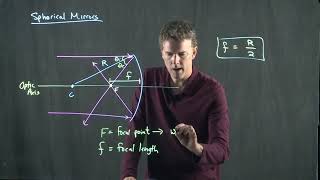
Spherical Mirrors | Physics with Professor Matt Anderson | M27-07

Spherical Mirrors | Physics with Professor Matt Anderson | M27-07

You know those holiday ornaments that are very shiny spheres? They show you a really small image of yourself. How does that ...

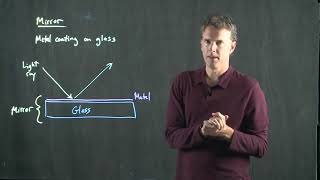
Mirrors | Physics with Professor Matt Anderson | M27-02

Mirrors | Physics with Professor Matt Anderson | M27-02

"The whole purpose of education is to turn mirrors into windows." - Sydney Harris Love that quote. But we're not that educated ...

Magnification | Physics with Professor Matt Anderson | M27-10

Magnification | Physics with Professor Matt Anderson | M27-10

When we see images in a curved mirror, they are sometimes bigger and sometimes smaller. How do we figure this out?

Image Formation with Spherical Mirrors | Physics with Professor Matt Anderson | M27-08

Image Formation with Spherical Mirrors | Physics with Professor Matt Anderson | M27-08

So we know we can see images in these curved mirrors, but how exactly do we figure out where the image is located?