At a Glance: Plausible text generation has been around for a couple of years, but how does it work - and what's next? Making yourself the all-powerful "Root" super-user on a computer using a buffer overflow attack.

Modes Of Operation Computerphile -

Plausible text generation has been around for a couple of years, but how does it work - and what's next? Making yourself the all-powerful "Root" super-user on a computer using a buffer overflow attack. We haven't got time to label things, so can we let the computers work it out for themselves?

Important details found

  • Plausible text generation has been around for a couple of years, but how does it work - and what's next?
  • Making yourself the all-powerful "Root" super-user on a computer using a buffer overflow attack.
  • We haven't got time to label things, so can we let the computers work it out for themselves?
  • Advanced Encryption Standard - Dr Mike Pound explains this ubiquitous encryption technique.
  • Program Correctness is incredibly important in computing - particularly in hardware design.

Why this topic is useful

This topic is useful when readers need a quick overview first, then want to move into supporting details and related references.

Sponsored

Frequently Asked Questions

Why are related topics included?

Related topics help readers compare nearby references and understand the broader subject.

What is this page about?

This page summarizes Modes Of Operation Computerphile and connects it with related entries, references, and supporting context.

Is the information always complete?

Not always. Some topics may need verification from official or primary sources.

Reference Gallery
Modes of Operation - Computerphile
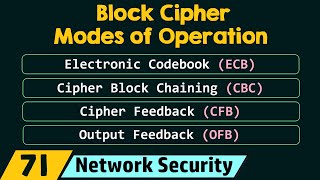
Block Cipher Modes of Operation
AES Explained (Advanced Encryption Standard) - Computerphile
OS Context Switching - Computerphile
Running a Buffer Overflow Attack - Computerphile
Multiple Processor Systems - Computerphile
Programming Paradigms - Computerphile
Program Correctness - Computerphile
Machine Learning Methods - Computerphile
AI Language Models & Transformers - Computerphile
Sponsored
View Full Details
Modes of Operation - Computerphile

Modes of Operation - Computerphile

Read more details and related context about Modes of Operation - Computerphile.

Block Cipher Modes of Operation

Block Cipher Modes of Operation

Read more details and related context about Block Cipher Modes of Operation.

AES Explained (Advanced Encryption Standard) - Computerphile

AES Explained (Advanced Encryption Standard) - Computerphile

Advanced Encryption Standard - Dr Mike Pound explains this ubiquitous encryption technique. n.b in the matrix multiplication ...

OS Context Switching - Computerphile

OS Context Switching - Computerphile

Read more details and related context about OS Context Switching - Computerphile.

Running a Buffer Overflow Attack - Computerphile

Running a Buffer Overflow Attack - Computerphile

Making yourself the all-powerful "Root" super-user on a computer using a buffer overflow attack. Assistant Professor Dr Mike ...

Multiple Processor Systems - Computerphile

Multiple Processor Systems - Computerphile

Just what does it mean to have a multi-processor system? Dr Steve Bagley on symmetric and assymmetric multi-processor ...

Programming Paradigms - Computerphile

Programming Paradigms - Computerphile

There are different styles of programming, some quite closely resemble pure mathematics. Mathematician and Computer Scientist ...

Program Correctness - Computerphile

Program Correctness - Computerphile

Program Correctness is incredibly important in computing - particularly in hardware design. Professor Graham Hutton takes us ...

Machine Learning Methods - Computerphile

Machine Learning Methods - Computerphile

We haven't got time to label things, so can we let the computers work it out for themselves? Professor Uwe Aickelin explains ...

AI Language Models & Transformers - Computerphile

AI Language Models & Transformers - Computerphile

Plausible text generation has been around for a couple of years, but how does it work - and what's next? Rob Miles on Language ...